8 min read
Disclosure: As an Amazon Associate and eBay Partner Network publisher, we earn from qualifying purchases. This doesn’t affect what we recommend or how we describe it.
Most guides on visual timers for adults with ADHD talk about “productivity hacks” or “optimizing your workflow.” Here’s the truth: for most of us, especially if you’re forgetful, overwhelmed, or just plain distracted, you don’t need another fancy system—you just need to SEE time passing. The real problem isn’t willpower or motivation. It’s that time is invisible, and our brains are experts at ignoring it until it’s too late. Visual timers turn time into something you can actually see, which makes a huge difference for sticking to tasks, remembering to switch gears, or just not burning dinner (again).
Comparison table: Visual timer types for distracted adults
| Type | Timer Range | Visual Display | Alarm Volume | Power Source | Price |
|---|---|---|---|---|---|
| Classic analog countdown | 1–60 min | Red disk shrinking window | 70–85 dB | AA battery | $ |
| Large digital with LED bar | 5–120 min | Multi-color LED strip | Up to 100 dB | USB rechargeable | $$ |
| Wearable vibrating timer | 1–99 min | Numeric countdown screen | Silent vibration | Coin cell battery | $$$ |
| Magnetic kitchen timer | 1–55 min | Rotating color dial | 80–90 dB | Mechanical wind-up | $ |
The price column compares within this guide: $ is the budget end, $$ mid, $$$ premium. For exact, up-to-date prices, see the live listings lower in the article.
Beginner’s pre-purchase checklist
- Check your usual timer length—do you need 5 minutes or 2 hours? Not all timers go above 60 minutes.
- Measure where you’ll put it—a dial timer over 3 inches wide won’t stick on a crowded fridge door.
- Test your hearing in the kitchen or office; if you miss oven beeps, pick a timer with at least 90 dB or a vibration option.
- Decide if you need silent operation—vibrating or visual-only timers are best for shared spaces or late-night use.
- Check your patience for batteries—mechanical timers never need charging, but digital ones can last up to 7 days per charge.
- Double-check if you want to move it between rooms; bigger LED timers usually need a nearby outlet.
- Verify if you need magnetic backing for sticking to appliances or a stand for use on your desk.
Classic analog countdown timers: Simple, visible, and hard to ignore
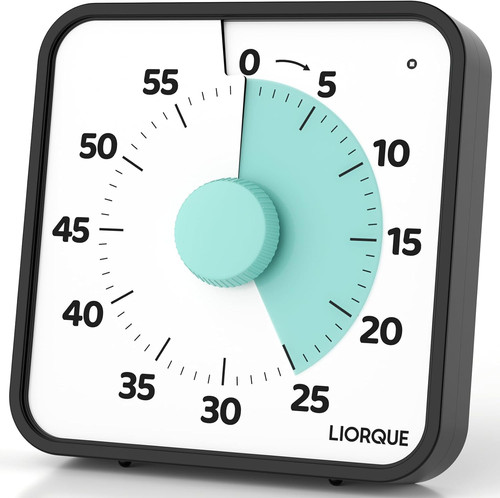
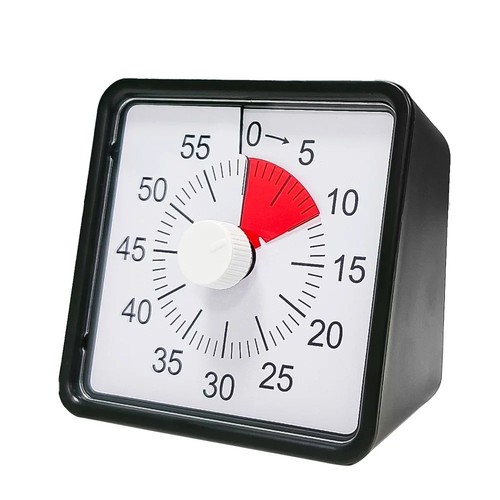
Analog countdown timers have been a staple for decades, and for good reason. The physical red disk that shrinks as time passes is clear and unmistakable—even from across the room. For adults with ADHD, this kind of visual feedback is a game-changer. You can glance up and instantly see how much time is left, which helps with pacing and task-switching (or just remembering to get up and check the laundry).
Most analog timers use AA batteries and run for up to 60 minutes. The alarm is usually a straightforward beep in the 70–85 dB range—enough to hear over everyday background noise, but not so loud it’ll wake the neighbors. If you want something cheap, reliable, and zero learning curve, this is where you start. See today’s deals
One thing to note: mechanical versions (wind-up, no batteries) are even simpler but can be a bit inaccurate, especially for very short time intervals. Battery-powered models tend to be more precise.
Large digital timers with LED bars: Big, bold, and impossible to miss
For anyone who needs a timer that screams “LOOK AT ME” (in a good way), the large digital timers with LED bars are top contenders. These typically feature a bright, multi-color LED strip that fades or shrinks as time elapses. Some models even let you choose the color—handy for color-coding tasks or rooms. The timer range is often much longer than analog options, with many covering 5 to 120 minutes.
These timers are perfect for busy kitchens, home offices, or anywhere you need a visual nudge visible from across the house. Alarm volumes can hit 100 dB, which is about as loud as a subway train—so you won’t miss it, even if you’re deep in hyperfocus mode. Most are USB rechargeable and last several days per charge. Compare options
The main trade-off is size and portability. With screens or LED strips 6 inches or longer, you’ll need some desk or counter space, and a nearby charging cable if you use it all day.
Related Guides
Wearable vibrating timers: For personal, silent reminders
If you need reminders in meetings, libraries, or anywhere you don’t want a loud beep, wearable vibrating timers are a lifesaver. These look like chunky digital watches or small clips, and they buzz your wrist or pocket instead of sounding an alarm. Most allow you to set any interval from 1 to 99 minutes, and some support multiple preset times.
Vibration is strong enough to get your attention, but won’t disturb others—ideal for medication reminders, Pomodoro sessions, or just making sure you leave for appointments on time. Battery life varies, but coin cell batteries can last weeks before swapping. The main downside is price—these are usually at the premium end. Check current prices
Be sure to check the vibration strength if you’re a heavy sleeper or tend to ignore your phone buzzing—some models are much stronger than others.
Magnetic kitchen timers: Old-school, portable, and fridge-friendly
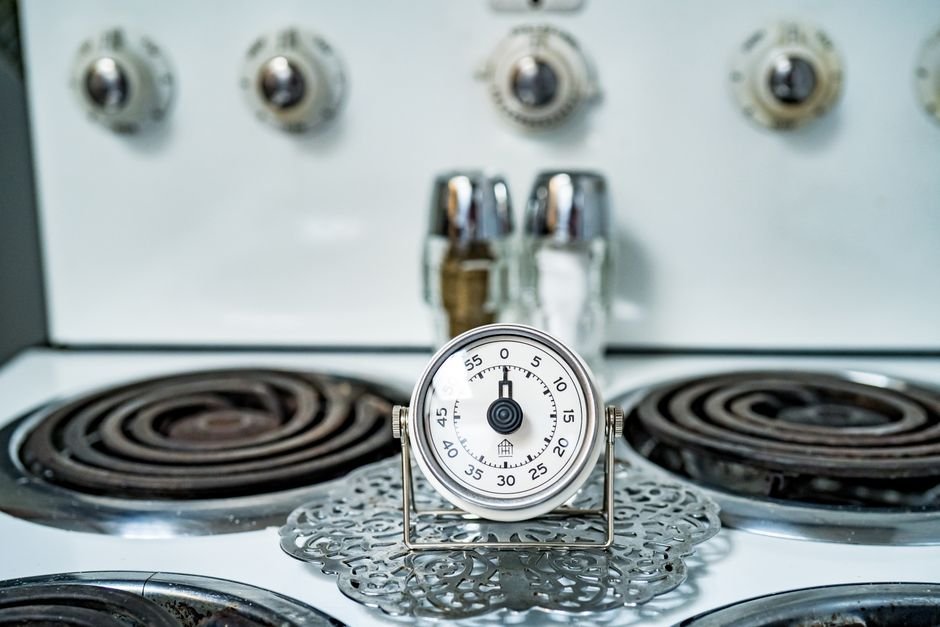
Magnetic kitchen timers are a favorite for their portability and zero-fuss setup. These are usually mechanical (wind-up), with a rotating colored dial that disappears as the minutes tick down. No batteries required, and you can slap them on any metal surface: fridge, filing cabinet, or even the side of a desk.
Timer ranges are usually up to 55 minutes, and alarms are in the 80–90 dB range—enough to hear over kitchen chaos but not quite as piercing as digital models. The real appeal is the tactile nature: turning the dial is satisfying, and seeing the color shrink is instant feedback. They’re also nearly indestructible (no batteries to leak or screens to crack). If you want simple, affordable, and portable, this is your go-to.
FAQ: Real-world questions about visual timers for adults with ADHD
How loud are the alarms on these timers?
Alarm volume typically ranges from 70 dB (about the sound of a vacuum cleaner) to 100 dB (like a jackhammer). Classic analog and magnetic timers are usually 70–90 dB. Large digital timers can reach 100 dB, which is hard to ignore even in a noisy kitchen. If you need total silence, look for a wearable vibrating timer or a visual-only LED model.
Can I set multiple reminders on one timer?
Most classic analog and magnetic timers only support one countdown at a time. Some large digital models allow you to program multiple intervals or even recurring alarms, though this varies. Wearable vibrating timers often support several preset times, so you can cycle through different reminders without resetting each time.
Will a visual timer work for heavy sleepers or deep hyperfocus?
If you routinely sleep through alarms or hyperfocus so deeply you miss your phone, prioritize timers with the loudest alarms (90–100 dB) or the strongest vibration. Wearable vibrating timers are best for personal reminders, while large LED digital timers with loud beeps are hard to miss for most people. No timer is foolproof, but a combination of loud sound and bright visuals gives you the best shot.
How long do the batteries or charge last?
AA battery-powered analog timers can last for several months of daily use. USB rechargeable digital timers usually run for 3–7 days on a single charge, depending on alarm volume and brightness settings. Wearable vibrating timers using coin cell batteries can go weeks or even a couple of months before needing a replacement. Mechanical wind-up timers need no batteries at all—they run as long as you keep winding them.
Is it easy to reset or adjust the timer for a new task?
Analog and magnetic timers are as simple as turning the dial—takes about two seconds. Large digital timers require pressing a few buttons, but most are designed for quick resets. Wearable timers can be fiddly if they have lots of buttons, so look for ones with dedicated quick-set features if you need to change intervals often.
Magnetic vs. wearable timer—which is better for daily routines?
Magnetic timers are great for fixed locations like the kitchen or office—they’re always in sight and simple to use. Wearable timers are better if you need reminders on the go, or in situations where noise is a problem. For routines like medication, leaving the house, or switching tasks at work, a wearable vibrating timer gives more flexibility. For cooking, cleaning, or working at your desk, a magnetic timer is usually more convenient.
What if my timer stops working—can I fix or return it?
Most digital and analog timers come with a basic one-year warranty. Battery or mechanical issues are common failure points, but these are usually easy to fix (swap the battery, check the dial isn’t jammed). Always check the return policy before buying, especially for digital or wearable timers, as some sellers have stricter rules for opened electronics.
Making time visible: Why visual timers work for ADHD brains
It’s not just about gadgets—visual timers work because they make time concrete. According to CHADD, visual cues help adults with ADHD stay aware of passing time and reduce the risk of “time blindness.” Seeing a shrinking disk or a fading LED bar keeps your brain anchored in the present, making transitions and deadlines less stressful. It’s a simple trick, but one that’s backed by both research and the day-to-day experiences of thousands of forgetful, busy people.
Pick a timer that matches your space, your volume needs, and your patience for batteries. Most importantly, pick one you’ll actually use—because the best timer is the one you don’t forget to set.


Still going to forget, aren’t you?
DontForget is a free Telegram reminder app that doesn’t ping once and give up — it hounds you (in a tone you choose, from gentle to brutal) until you actually do the thing. Nothing to download; it runs right inside Telegram.
Try DontForget free →Last updated: June 2026 · How we research and evaluate