8 min read
Disclosure: As an Amazon Associate and eBay Partner Network publisher, we earn from qualifying purchases. This doesn’t affect what we recommend or how we describe it.
How do you actually get your child to stay on task, finish their homework, or brush their teeth for the full two minutes—without standing over them like a time-obsessed hawk? For many busy parents and easily-distracted kids, the answer is a visual timer. These simple devices work wonders for children who struggle to grasp the passage of time, especially those who lose track mid-task, melt down at transitions, or simply need a little nudge to keep moving. In this guide, you’ll find out exactly which types of visual timers for kids help most, how to pick the right one for your situation, and what details make a real difference in daily life (not just on paper).
Visual timers for kids: What actually works in real homes?
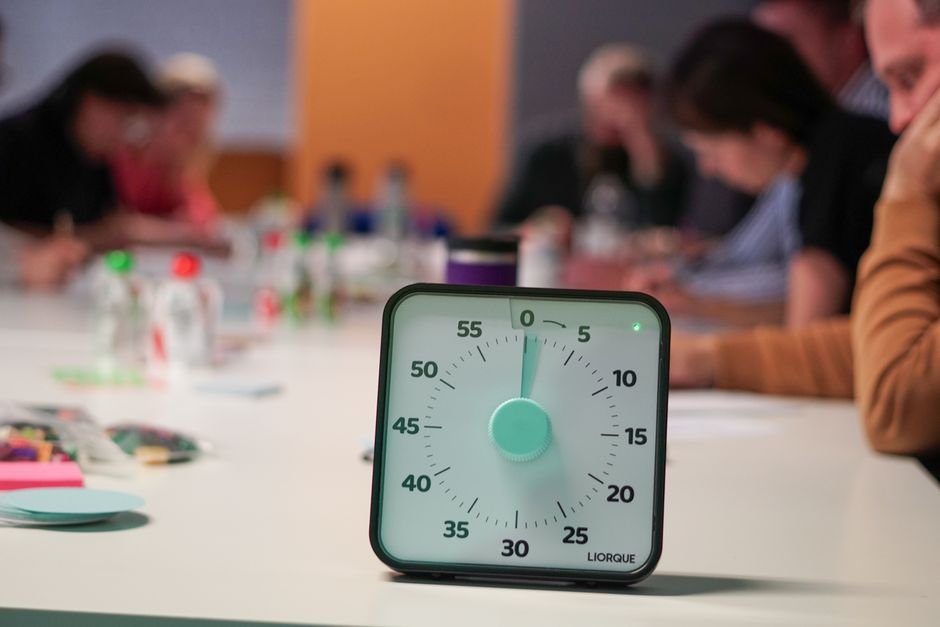
Visual timers aren’t just clocks with extra steps. They’re purpose-built to show the passage of time in a way that’s concrete—think disappearing color blocks, moving dials, or playful lights—so even young or neurodivergent kids can “see” time slipping away. But walk down any parenting aisle and you’ll see a wild range: twisty egg-timers, color-changing cubes, digital screens with countdown bars, even apps that animate a rocket blasting off. The trick is matching the timer’s features to your child’s attention span, your family’s routine, and (let’s be honest) your own tolerance for beeping and battery changes.
Below, you’ll find a side-by-side table comparing the four most practical types of visual timers for kids, including their strengths, limitations, and what makes each one work (or fail) for forgetful, busy families.
Side-by-side: Which visual timer style suits your family?
| Type | Visual Cue | Timer Range | Alarm Volume | Battery Life | Price |
|---|---|---|---|---|---|
| Classic Disk Timer | Red disk disappears as time passes | 1–60 min | 70–80 dB | ~6 months (AA battery) | $$ |
| Sand Hourglass | Colored sand falls | 1, 3, 5, 10 min (fixed) | Silent | Unlimited | $ |
| Light-Up Countdown Timer | LED lights change or turn off | 1–99 min | 85–100 dB | 2–4 weeks (rechargeable) | $$$ |
| Magnetic Digital Timer | Numerical countdown + visual bar | 1–99 min | 70–90 dB | ~3 months (AAA batteries) | $$ |
Price: $ = budget, $$ = mid-range, $$$ = premium — relative to the options compared above. Live prices and current stock are below.
Quick decision tree
- If you want total silence: Sand hourglass timers are your go-to (no alarms, no batteries, just gravity).
- If your child needs a strong visual cue and adjustable time: Classic disk timers are the sweet spot for most routines.
- If you need a timer for longer tasks or chores: Go with a light-up countdown or magnetic digital timer (both reach up to 99 minutes).
- If your kiddo ignores quiet alarms: Choose a light-up countdown timer—the loudest option, plus eye-catching lights.
- If your budget is tight: Sand hourglasses cost the least and never need batteries, but they’re only good for short, fixed-length tasks.
What to look for when choosing a visual timer for your child
Not all timers are created equal, and what works for one family can be a total flop for another. Here are the most practical things to check—based on years of wrangling forgetful, easily-distracted kids (and parents):
- Timer range: For homework or screen-time, you’ll want at least 1–60 minutes. For toothbrushing or quick transitions, 1–5 minutes is plenty.
- Visual clarity: A big, disappearing red disk or a bright LED bar is easier for kids to understand than a tiny digital countdown. Look for face sizes of at least 6 cm (2.5 inches) in diameter for wall or desk use.
- Alarm volume: If your child tunes out soft beeps, check for an alarm rated at 85 dB or higher. For shared spaces (or kids who startle easily), 70–75 dB is less jarring.
- Battery or power: Rechargeable models last 2–4 weeks per charge; battery-powered disk or digital timers usually run for 3–6 months on AA or AAA batteries. Sand timers never run out, but are limited to their fixed duration.
- Mounting options: Magnetic backings stick to fridges or metal desks. Freestanding bases are best for bedrooms or shared tables.
- Reset and adjustability: For routines that change daily, make sure you can reset or adjust time with a single button or twist—no fiddly menus.
Ready to compare your top picks? Check current prices and see which timer fits your budget and routine.
Why visual timers help forgetful and distracted kids (and parents!)
Kids (and plenty of adults) struggle to feel the passage of time, especially when they’re focused on something fun, overwhelmed, or just plain tired. Visual timers turn invisible minutes into something you can actually see disappearing. This helps with:
- Transitions: Giving a five-minute warning before switching activities, so meltdowns are less likely.
- Task completion: Keeping focus on chores, homework, or teeth-brushing until the time is up—without constant nagging.
- Independence: Letting kids manage their own routines, building confidence and reducing power struggles.
There’s solid research behind these effects: visual timers are recommended by many autism and ADHD support organizations as a practical, low-tech way to make routines less stressful and more predictable for children who struggle with time-blindness.
For busy parents, the real magic is that you can set the timer, walk away, and let the device do (most of) the reminding. No more repeating yourself twenty times—unless, of course, you want to.
Curious to try one out right away? See today’s deals on the most popular visual timer types for families.
How to use visual timers with kids who are forgetful, distracted, or resistant
The best visual timer in the world won’t help if it just sits on a shelf. Here’s how to actually make it work for your family:
- Start with one routine: Pick a single daily task that causes friction—like getting shoes on, homework time, or bedtime wind-down.
- Show, don’t just set: Let your child watch you set the timer and explain what will happen when the time is up. For younger kids, narrate: “When the red is gone, we’re all done!”
- Stay consistent: Use the timer at the same point in the routine for at least a week before mixing it up.
- Let the timer be the boss: When the alarm goes off, transition right away—even if it’s tempting to add “just one more minute.”
- Celebrate success: Notice when your child finishes before the timer or transitions calmly. Praise the effort, not just the result.
If your child has sensory sensitivities or is easily startled, test the alarm volume in advance (and keep a finger on the off switch, just in case). For more tips on using visual supports, check resources from leading child learning organizations.
Related Guides
FAQ: Real-world answers about visual timers for kids
How loud are the alarms on most visual timers?
Most battery-powered disk or digital visual timers beep at 70–90 decibels—roughly the volume of a loud conversation to a hair dryer. Some light-up timers go as high as 100 dB, while sand timers are completely silent. Always check the decibel rating if your child is sensitive to noise or tends to ignore quiet alarms.
Can I set multiple timers at once?
Most classic disk and sand timers only let you set one countdown at a time. Digital and light-up countdown timers often support multiple alarms or user-programmed intervals, which is handy for back-to-back activities (like homework then screen time). If you need this feature, look for “multi-alarm” or “interval” in the specs—expect to pay a bit more for this convenience.
Is it easy to reset or adjust the timer for a new task?
Classic disk timers usually reset with a simple twist; digital and light-up models often have a single button to clear and start again. Sand timers can’t be adjusted—you just flip them over for the same fixed length every time. For routines that change daily, an adjustable timer is much less hassle.
Will a visual timer work for heavy sleepers or kids who ignore alarms?
For kids who sleep through anything (or tune out background noise), look for timers with both a loud alarm (at least 90 dB) and a strong visual cue, like flashing lights or a large color disk. Placing the timer right next to the child, rather than across the room, also helps. If this still isn’t enough, pairing a timer with a vibrating alert (like a wearable device) can be more effective—but that’s a different category entirely.
How long do batteries last in typical visual timers?
Battery-powered disk and digital timers usually run for 3–6 months on one or two AA or AAA batteries. Rechargeable light-up timers last 2–4 weeks per charge, depending on brightness and alarm use. Sand hourglass timers never need batteries, but are limited to their preset duration.
Magnetic or tabletop—what’s better for forgetful kids?
If your child tends to lose or ignore things that aren’t in their line of sight, a magnetic timer stuck to the fridge or a metal desk can help. Tabletop timers are better for routines in bedrooms or at the dining table. Some digital models offer both options, but magnets can lose strength over time or not stick to all surfaces—so check before you buy.
What if the timer breaks or stops working—are they covered by warranty?
Most visual timers come with a 6–12 month warranty for manufacturing defects, but coverage for drops or water damage is rare. Always check the return policy before buying, especially if your child is a “frequent dropper.” Some sellers also offer extended coverage for a small fee. If repairs aren’t practical, replacement is usually the fastest fix.
Ready to pick the right timer for your family’s needs? Compare options and see what’s in stock today.



Still going to forget, aren’t you?
DontForget is a free Telegram reminder app that doesn’t ping once and give up — it hounds you (in a tone you choose, from gentle to brutal) until you actually do the thing. Nothing to download; it runs right inside Telegram.
Try DontForget free →Last updated: July 2026 · How we research and evaluate