
8 min read
Disclosure: As an Amazon Associate and eBay Partner Network publisher, we earn from qualifying purchases. This doesn’t affect what we recommend or how we describe it.
Most pill case guides will tell you that “waterproof” means your medication is safe from any splash or spill. The truth? Most so-called waterproof pill cases leak at the worst possible moment—like when your backpack gets caught in the rain, or your toddler launches the weekly organizer into the bath. If you’re forgetful or juggling a million things, you need a pill case that doesn’t just say it’s waterproof, but actually keeps your meds bone dry—no matter how chaotic life gets.
What most buying guides get wrong about waterproof pill cases
Here’s the dirty secret: “Waterproof” is one of the most abused words in pill organizer marketing. Many cases are “splash-proof” at best. A quick rinse? Maybe they’ll survive. Dropped in a puddle? Now you’ve got soggy pills and a ruined routine. If you’re managing ADHD meds, daily supplements, or life-saving tablets, that’s not a risk you can take. So what actually makes a pill case reliably waterproof—and how do you spot the fakes?
Let’s break down the real-world options, from rugged aluminum tubes to clever silicone-sealed organizers. We’ll compare not just how well they keep out water, but also how they fit into a forgetful or busy person’s daily chaos—because the best pill case is the one you’ll actually use.
Comparison: Which waterproof pill case approach is truly leakproof?
| Type | Waterproof Rating | Capacity | Size (L×W×H) | Ease of Use | Price |
|---|---|---|---|---|---|
| Aluminum Screw-Top Tube | IPX8 (submersible 1m/30min) | 3–8 pills | 7×2×2 cm | Single compartment, keychain | $ |
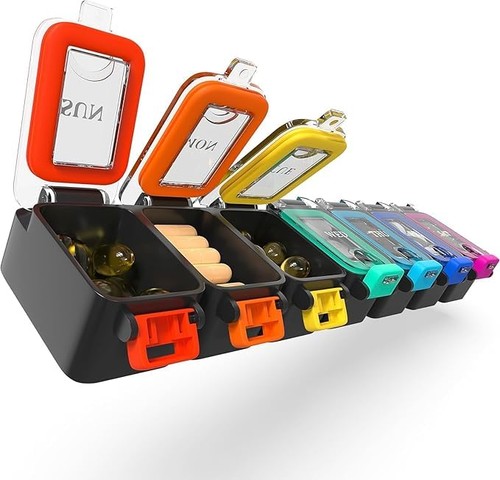
| Multi-Day Silicone-Sealed Organizer | IPX7 (immersion up to 1m/30min) | 7 days × 4 slots | 18×10×3 cm | Flip-lid, color-coded | $$ |
| O-Ring Gasket Plastic Case | IPX6 (high-pressure spray) | Up to 30 pills | 10×6×2 cm | Push-latch, single compartment | $ |
| Waterproof Bag with Zip Seal | IPX5 (low-pressure jet) | Unlimited (flexible) | Varies (usually 12×8 cm) | Reusable, fiddly to open | $ |
Price tiers ($/$$/$$$) read across this comparison only — they mark each product’s relative position from cheapest to priciest in the set. Actual prices live below.
Beginner’s pre-purchase checklist
- Test the seal with a dry tissue inside before first use—if the tissue stays dry after a dunk, your pills will too.
- Count how many pills you carry daily and check each compartment’s real capacity (a “7-day” case often means tiny slots).
- Measure the largest pill or capsule you take; some tubes are too narrow for big supplements.
- Check if the case fits in your go-to bag, pocket, or on a keyring—bulky organizers are easy to leave behind.
- Look for an IPX rating (IPX7 or higher is best for full submersion; lower ratings may not survive a spill or rainstorm).
- Make sure you can open and close it with one hand (important if you’re in a rush or have dexterity issues).
- Confirm the material is food-safe and BPA-free for direct pill contact.
The spec almost nobody talks about: IPX ratings (and what they mean for pill safety)
Lots of pill cases claim to be waterproof, but unless they list an IPX rating, you’re rolling the dice. The IPX system (originally for electronics) rates how well an object resists water. IPX7 means your case survives being dropped in a puddle or sink for up to 30 minutes. IPX8 is even better—think swimming pool accidents. Anything less (IPX4–IPX6) might shrug off a splash, but not full immersion. For medication that must stay bone dry, IPX7 or IPX8 is what you want. If a case doesn’t list a rating, assume it’s “water-resistant” at best.
For a breakdown of what each rating means, check the Canadian Standards Association’s guide to waterproofing standards. It’s a bit technical, but worth a look if you want to avoid soggy pills.
Ready to see which type fits your routine? Compare options now for up-to-date deals on waterproof pill cases that actually work.
Related Guides
- Waterproof Pill Cases That Actually Keep Your Meds Dry
- Our guide to Compact Pill Organizers That Actually Help You Remember Your Meds
- Best Digital Wall Calendars That Actually Help You Stay on Track
- Top Digital Wall Calendars That Actually Help You Stay Organized
- Our guide to Vibrating Wrist Alarms That Actually Work: Our Honest Reviews
- Our guide to Alarm Clocks That Actually Help With ADHD Forgetfulness
How to spot “waterproof” fakes: five warning signs
Some pill cases look waterproof but fail at the first sign of real moisture. Here’s what to watch for if you’re easily distracted or just want to avoid disappointment:
- Missing or vague IPX rating: If it just says “waterproof” with no number, be skeptical.
- Loose or shallow seal: Run your finger along the lip—if you can wiggle the lid or see daylight, water can get in.
- No gasket or O-ring: A real waterproof case always has a visible rubber seal where the two halves meet.
- Thin or brittle plastic: Cheap cases crack easily, and even a tiny hairline means leaks.
- Too many moving parts: Hinges and multiple compartments are handy, but more seams mean more places to leak—especially with budget organizers.
Feeling overwhelmed? Don’t worry—you don’t need a PhD to pick a solid case. Just focus on the seal, the rating, and how it fits your real life. If you’d rather skip the guesswork, see today’s deals for vetted waterproof organizers.
Daily-life test: which pill case style matches your routine?
Let’s get practical. The right waterproof pill case depends on where (and how) you’re likely to forget or lose your meds. Here’s what works best for different real-world messes:
- For the “always in my bag” crowd: Aluminum screw-top tubes are nearly indestructible and attach to your keys. They’re tiny (usually 3–8 pills max), but nothing beats them for true waterproofing. If you take several meds, you’ll need one per type or a bigger option.
- For managing a complex daily schedule: Silicone-sealed weekly organizers let you pre-sort multiple doses. Look for ones rated IPX7 or higher with a single gasket running around all compartments, not just individual lids.
- For parents and swimmers: O-ring gasket cases (usually clear or see-through plastic) are a good middle ground—big enough for a week’s worth, but still pocketable. Just don’t trust them in a deep dunk.
- For travel or emergencies: Zip-seal waterproof bags work in a pinch—especially if you need to carry blister packs or odd-shaped pills. They’re cheap and flexible but fiddly and not as robust as a hard case.
If you’re still unsure, it’s worth reading up on safe medication storage practices—especially if you live somewhere humid or have kids who love “helping” with your stuff.
Once you’ve figured out your style, view what’s available to find the best fit for your daily chaos.
FAQs for busy, forgetful, and easily distracted people
How long does a waterproof pill case actually keep pills dry?
A properly sealed, IPX7 or IPX8-rated pill case can keep your pills dry for at least 30 minutes of full immersion, and often much longer for splashes or rain. If you’re routinely dunking your bag, check the seal every few months—rubber gaskets can degrade over time and may need replacing yearly for best performance.
Which is better for daily use: screw-top tubes or silicone-sealed organizers?
Screw-top tubes win for pure waterproofing and portability—they’re simple, tough, and fit on your keychain. But if you need to organize multiple meds or doses per day, a silicone-sealed multi-slot organizer is more practical, even if it’s a bit bulkier. Choose based on how many pills you carry and how often you need to access them.
Can I use a waterproof pill case for liquid meds or just tablets?
Most waterproof pill cases are designed for solid pills, not liquids. Some heavy-duty aluminum or plastic cases can technically hold single-dose liquid vials, but always check the manufacturer’s specs. For liquid meds, you’ll usually want a specific leakproof container with a higher IPX rating and a certified food-safe liner.
Are there pill cases that float if dropped in water?
Some plastic O-ring cases and silicone-sealed organizers are designed to float—especially those with thicker walls and less metal. Always test this yourself by tossing it in a sink or bathtub (empty first!). Aluminum tubes usually sink, so if you’re on a boat or near water, a floating case is a smart choice.
What if the pill case seal breaks or gets lost—can I buy replacements?
Many high-quality waterproof pill cases use standard-size O-rings or silicone gaskets that can be replaced if they wear out or break. Check the product’s details or reach out to the seller. For budget cases, replacement seals may not be available, so it’s safer to buy a new case if you notice leaks.
How do I clean a waterproof pill case without ruining the seal?
Hand wash the case with mild soap and warm water, making sure to remove the gasket or O-ring first if possible. Let all parts dry completely before reassembling—trapped moisture can cause mold or compromise the seal. Avoid harsh chemicals, which can degrade the rubber and plastics over time.
Is there a warranty or guarantee if my “waterproof” pill case leaks?
Most reputable pill case makers offer at least a 30-day satisfaction guarantee, with some mid-range and premium cases covering manufacturing defects for up to a year. Always keep your receipt and test the case right away—if it leaks, contact the seller for a replacement or refund. Budget cases rarely have robust warranties, so check policies before buying.
Choosing the right waterproof pill case doesn’t have to be a gamble, even if you’re the type who forgets where you put your keys (or your actual pills). Focus on the real specs, test before you trust, and you’ll keep your meds dry no matter how much life throws at you.


Still going to forget, aren’t you?
DontForget is a free Telegram reminder app that doesn’t ping once and give up — it hounds you (in a tone you choose, from gentle to brutal) until you actually do the thing. Nothing to download; it runs right inside Telegram.
Try DontForget free →Last updated: July 2026 · How we research and evaluate